Where to look on the 3D slope
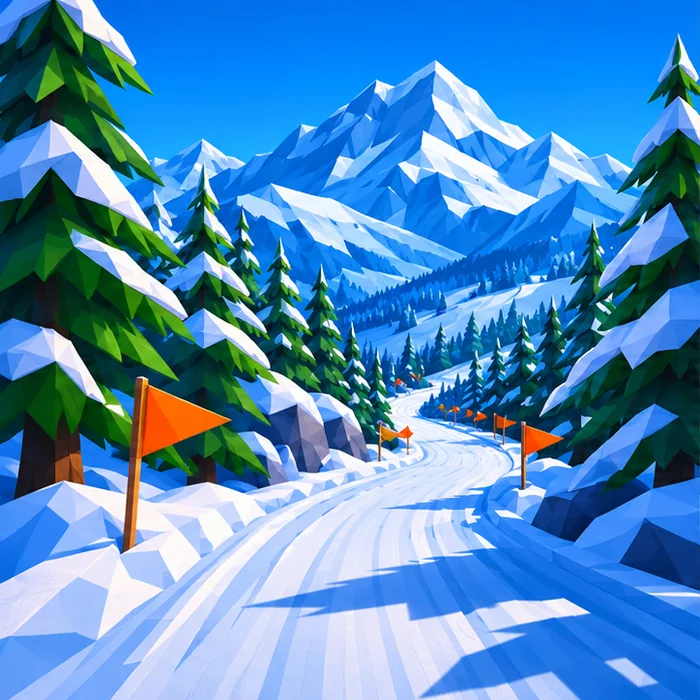
Two pines can look like a solid wall until you notice where their trunks meet the snow. One is close, the other farther downhill. If their bases are staggered, you may have room to pass the first tree and turn before you reach the second. Start a run in Sled Rider 3D and try picking your route from those two points on the ground. The tips of the trees will still be there when you need them.
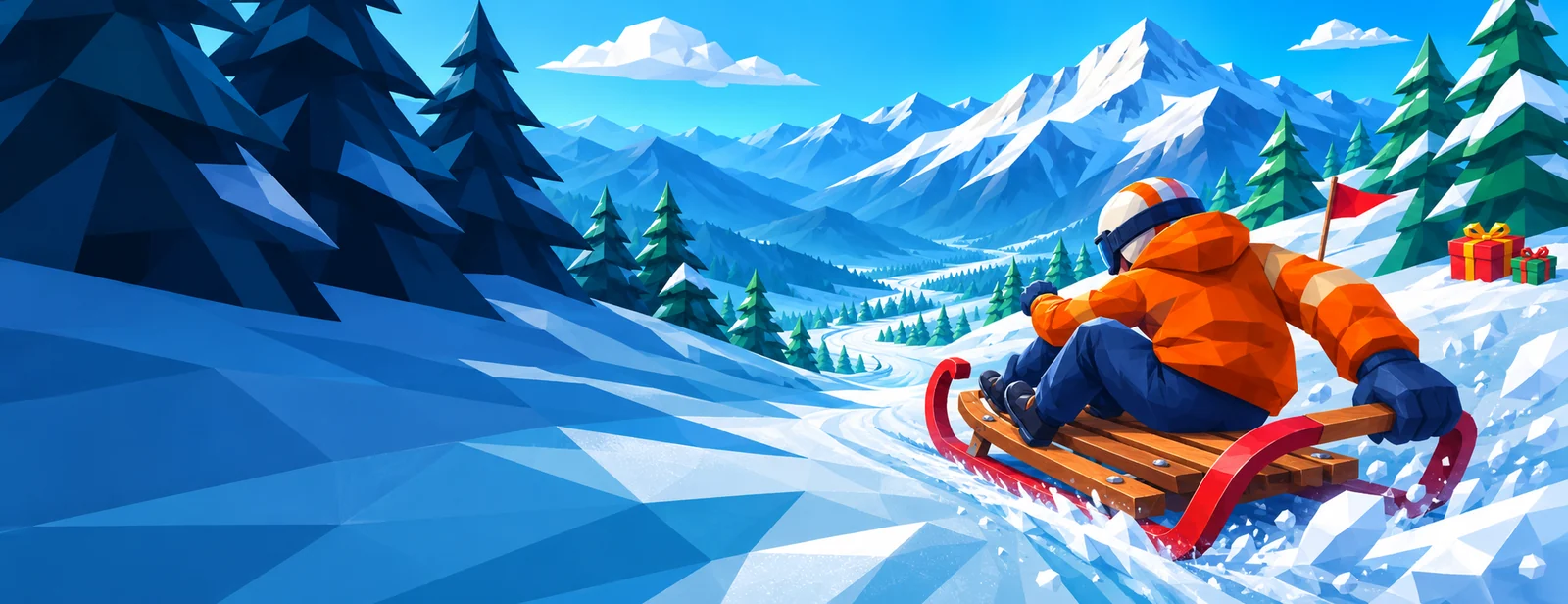
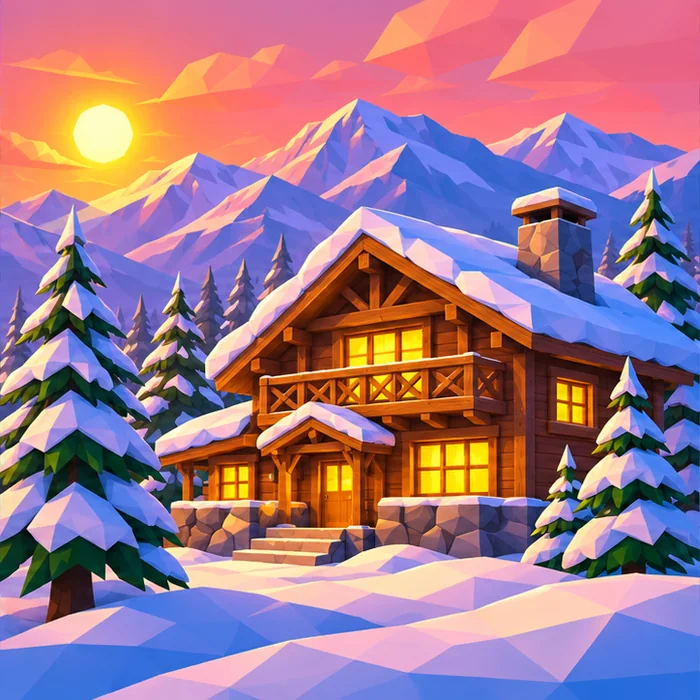
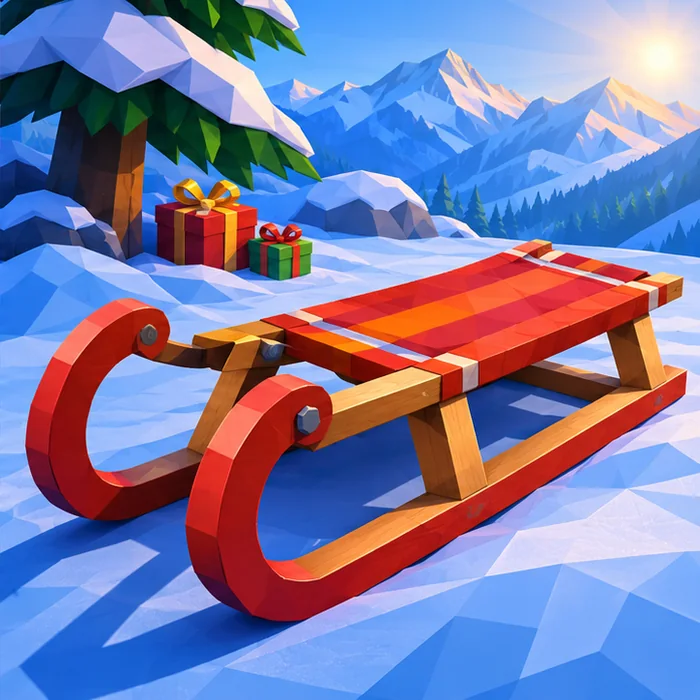
This is the same Sled Rider game you can launch from the home page. From the starting ridge, the view drops down between two log cabins. The wooden runners fill the bottom of the screen, while the pines straight ahead still look small enough to ride right over. Follow the space between the tips of the runners with your eyes. Where that line meets the first row of trunks is where you need to look for your opening.
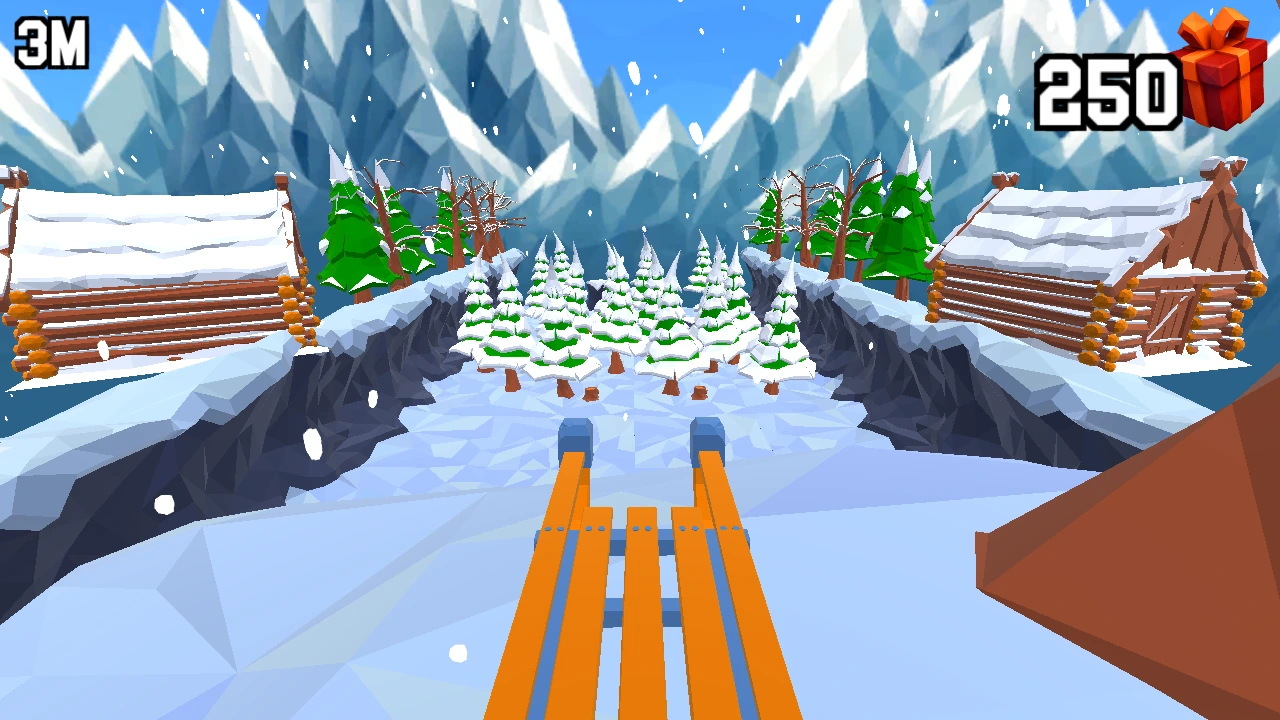
Find a gap wide enough for the sled
A bright stripe of snow between two objects is an invitation to take a closer look. Follow it down to the near end. Sometimes the stripe leads straight between the hazards. Sometimes it ends at the foot of a boulder, and the inviting patch of white belongs to the slope behind it. Trace a continuous strip of ground from your sled to the opening before you aim for it.
Allow a margin on both sides. If a gap is so narrow that you have to keep checking the nearest trunk, it will demand all your attention just when the next obstacle comes into view. Look for a wider way around, even if it takes you off the middle of the slope. You can stay on that side while the snow is clear. Returning to the center after each obstacle adds a turn and can send you straight into the tree you just steered around.
Read the space behind a rock
A rock in the middle of the trail gives you two edges to inspect. Imagine a line along its left side and carry that line a short way downhill. Do the same on the right. If one line runs into a pine and the other continues across open snow, choose the open side early. That little look beyond the rock is worth more than squeezing past its closest corner.
Some views hide what's immediately behind the obstacle. If you have the space, move sideways while the rock is still well ahead. The change in viewpoint can reveal the ground beyond its shoulder. You might see a second rock tucked behind it or discover that the route is clear after all. Make that observation before committing to a jump. By the time you are over the first obstacle, a surprise on the far side will be much closer.
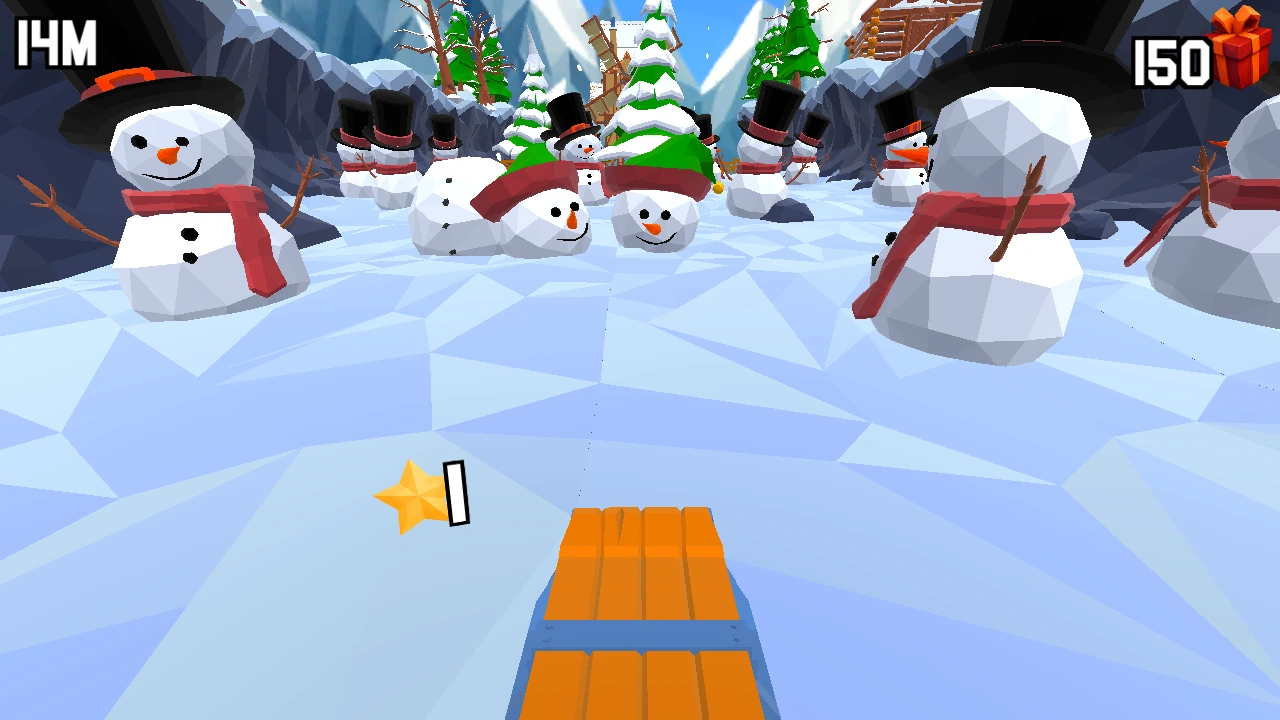
Judge a crossing snowball
With a tree, seeing where it stands tells you where it will be when you arrive. A rolling snowball makes you answer a second question. Which way is it traveling across the slope? Watch it against something fixed, such as a tree farther downhill. After a moment you can tell which side the ball is leaving and which side it is moving into. Give its leading edge plenty of space.
Say a snowball is rolling from left to right and there is a gift on its right. The strip between the ball and the gift might look generous when you first spot it. You and the ball can both reach that strip at about the same time. Let the gift go and look for snow in the ball's wake once it has passed. Keep watching the near edge of the ball until the crossing is clear enough for the whole sled.
Pick a landing before you jump
When the snow breaks away in front of you, look across the gap for the patch of ground you hope to touch down on. A strip with open snow beyond it gives you somewhere to go after landing. A strip that ends against a tree asks for a second move almost immediately. Line up with the longer exit while there is still room to steer on the approach.
Depth is easy to misjudge if you concentrate on just one edge. Watching the near lip helps you choose when to leave the snow, but the far lip tells you how much ground you have to cover. Take a look at both. If the gap ends off to one side and a continuous path around it is still within reach, take that path. Save the jump for a crossing where you can actually see what you're trying to reach.
Use gift boxes as landmarks
A wrapped present stands out against the snow, which makes it handy for judging the route even when you decide to leave it. Suppose a present appears just to the left of a tree. Is it sitting on the snow in front of the trunk, or can you see a stretch of ground between the tree and the box farther downhill? In the second case, pass the trunk first and check the gift again from the new angle.
On a clear stretch, try holding your line and watching where a present travels in the picture. A box directly in your path gets larger as you approach. One that slides farther off to the side would need a steering correction. Decide how much room you have for that correction while the box is still ahead. The easiest presents to bank are the ones you can ride through and keep going in exactly the direction you already wanted.
Choose a route through a crowded stretch
Consider three objects spread across the slope. There's a snowman on your left, a pine straight ahead, and a rock farther back on the right. If you only look at the pine, either turn seems reasonable. Once you notice the rock, the choice changes. If the snowman will have passed by the time you reach the tree, the left side might open just as the right side starts to close.
You can practice that judgment in an ordinary run. Pick two objects that seem side by side and guess which one you'll pass first. Keep the sled on clear snow and watch the pair as you approach. If the order surprises you, look back in your mind at the clue you used. A tall tree can dominate the picture from much farther away than a short rock. Their positions on the ground usually make a better guide to the order you'll meet them.
Try one run with your eyes farther downhill
For a distance attempt, give yourself a small challenge. Each time you clear something, already have a patch of snow in mind for the next turn. You can say it out loud if that helps. Left of the rock, through the middle, past the pine. If you find yourself calling out nothing but the names of obstacles, pick a place beside one where you want the sled to travel.
When the run ends, see if you can describe the final view in a sentence. Maybe the rock hid a tree. Maybe a clear landing became a tight squeeze because you approached it at an angle. On the next descent, watch for that particular feature. Even if the next stretch looks completely different, you'll know where to spend an extra glance when a similar shape appears on the horizon.